
 Sales :
  Email :
Summarize this article using AI
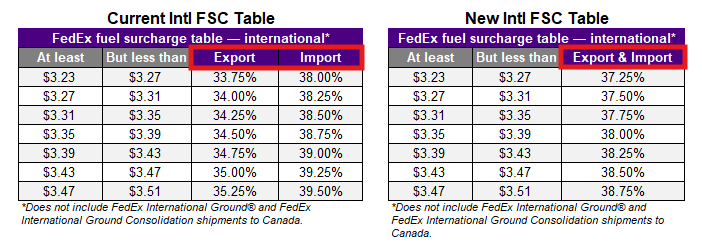
FedEx has announced another update to its international fuel surcharge structure, and this one changes the framework itself. Effective Monday, June 22, 2026, FedEx is consolidating its previously separate Export and Import fuel surcharge tables into a single unified table.
If you move freight across borders, this is more than a routine rate tweak. Collapsing two tables into one resets the baseline for what you pay, and the effect varies by company depending on the direction your packages travel. Here's what the change means for your shipments and your budget.
How is the new unified FedEx international fuel surcharge table structured?
By merging the Export and Import tables, FedEx is applying a single surcharge schedule to international traffic in both directions. The result is an uneven change: export shipments will see an effective surcharge increase of 3.5%, while import shipments will see a slight decrease of 0.75%.
In other words, the consolidation raises the cost of sending goods out of the country and modestly lowers the cost of bringing them in. If your international volume leans toward exports, you'll feel the increase directly. If your business runs heavily on imports, the change works slightly in your favor — though not nearly enough to offset what export-focused operations will absorb.
How does this compare to FedEx's May 2026 fuel surcharge update?
This is the second international fuel surcharge adjustment from FedEx in roughly six weeks. On May 11, 2026, FedEx raised export surcharges by 2% and import surcharges by 2.5%. The June 22 consolidation then adds another effective 3.5% increase on exports while trimming imports by 0.75%.
Stacked together, that's a steady climb for anyone shipping internationally — especially on the export side, where two consecutive updates now push your fuel surcharge meaningfully higher than it was this spring. Frequent, back-to-back changes like these make it harder to predict your true cost from one billing cycle to the next.
Why is FedEx raising fuel surcharges while diesel prices are falling?
The timing is worth a closer look. Diesel prices have been declining for the past five weeks, and FreightWaves reported they hit their lowest point since March 9 just this past week. Normally, falling fuel costs would point toward lower surcharges — not higher ones.
There's a nuance here. Jet fuel, which powers the air and international shipments these tables cover, runs on a separate cost index from diesel. But falling diesel prices can be an early signal of broader fuel price movement ahead. Read that way, this update looks less like a response to current costs and more like a revenue protection move — FedEx locking in higher fuel surcharge rates now to insulate itself if fuel costs continue to trend downward. When the index drops, the higher baseline helps protect the carrier's surcharge revenue, not your budget.
What does this change mean for your international shipping costs?
Businesses with heavy international export volume will feel this change most directly through the higher fuel surcharge. The more outbound packages you tender, the more that effective 3.5% increase compounds across your invoices — and because it builds on the May increase, the cumulative effect is larger than any single update suggests.
It's also worth watching how the rest of the market responds. UPS has been adjusting its own international surcharges since March, and carriers tend to move in step with one another. If that pattern holds, this likely won't be the last international surcharge change you see this year.
How can you protect your shipping budget from rising fuel surcharges?
There's plenty you can do before this affects your bottom line. Start by reviewing your recent international invoices to pin down how the unified table reshapes your export and import costs lane by lane. From there, run the May and June changes together across your busiest routes so the cumulative impact is clearly well ahead of your next billing cycle.
That's where TransImpact comes in. Our Parcel Spend Intelligence breaks down each line item across your invoices, giving you a clear understanding of what the consolidated table is costing you — and flagging any charges that don't add up. From there, our Parcel Contract Negotiation team puts your own shipping data to work, negotiating terms that take the edge off increases like this one. The result: full clarity on every dollar you spend, and a clear path to winning some of it back.